
The 3AM wake-up call
Diane owns 12 rental properties across England.
Last month, she checked for EPC changes for the new year. Eight properties rated below C.
She did the maths at 3AM.
Upgrade costs could reach £240,000.
Penalties could hit £30,000 per property.
She is not alone.
Over half of UK landlords face the same problem.
The EPC changes for 2026 mark the biggest rental regulation shift in over a decade.
This is no longer a box-ticking exercise.
It is a portfolio survival decision.
What EPC Changes in 2026?
EPC change deadlines explained
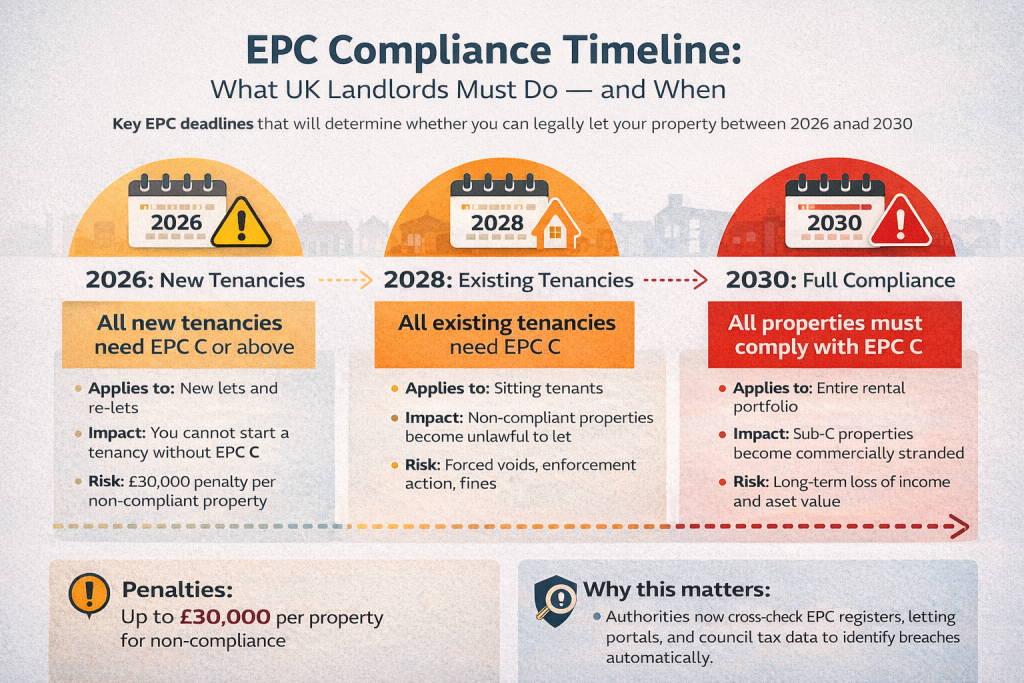
From 2026, all new tenancies must meet EPC C.
From 2028, existing tenancies must also comply.
By 2030, all rental properties must meet the standard.
Local councils now enforce rules aggressively.
They cross-check EPC data with council tax and letting portals.
Guide to EPC certificates for landlords
Penalties and upgrade costs
Non-compliance fines can reach £30,000 per property.
Upgrading from D to C typically costs £3,500–£10,000.
The challenge?
New EPC metrics are still under consultation and expected in late 2026.
Landlords face a risk.
Upgrade too early and waste money.
Wait too long and face contractor shortages.
UK Government EPC guidance (official source)
The Portfolio Landlord’s Dilemma
Marcus owns 25 properties.
His tenants now check EPC ratings before viewings.
Cold homes trigger complaints.
Complaints trigger inspections.
C-rated homes let faster.
They attract better tenants.
They command higher rents.
D and E-rated homes sit empty longer.
The goal is not speed.
The goal is smart sequencing.
Smart Compliance Strategies
Start with assessment, not assumptions
Most landlords do not know their EPC score.
Letter ratings are not enough.
Commission up-to-date EPCs across your portfolio.
Focus on point gaps, not colours.
Document every upgrade.
Photos matter.
Undocumented work often gets ignored during reassessment.
Low-cost, high-impact EPC upgrades
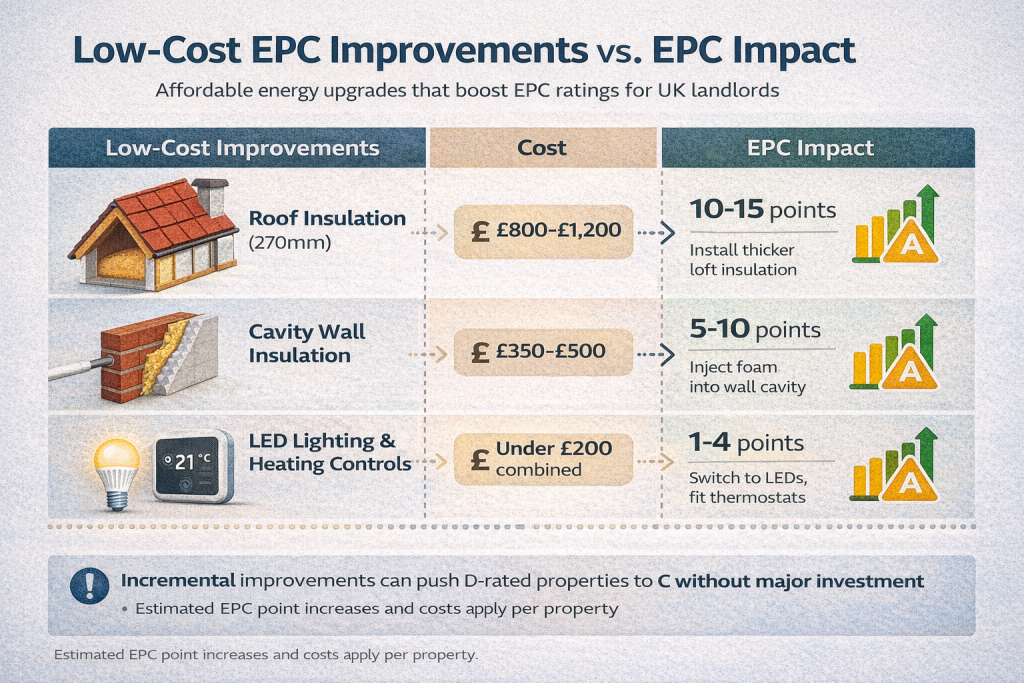
Start small.
Win points quickly.
- Loft insulation (270mm): +10–15 points
Cost: £800–£1,200 - Cavity wall insulation: +5–10 points
Cost: £350–£500 - LED lighting + cylinder insulation: +1–2 points
Cost: under £200
These upgrades alone often move properties from D to C.
Plan work during void periods.
Avoid tenant disruption.
Protect rental income.
Cost-Effective Upgrade Pathway
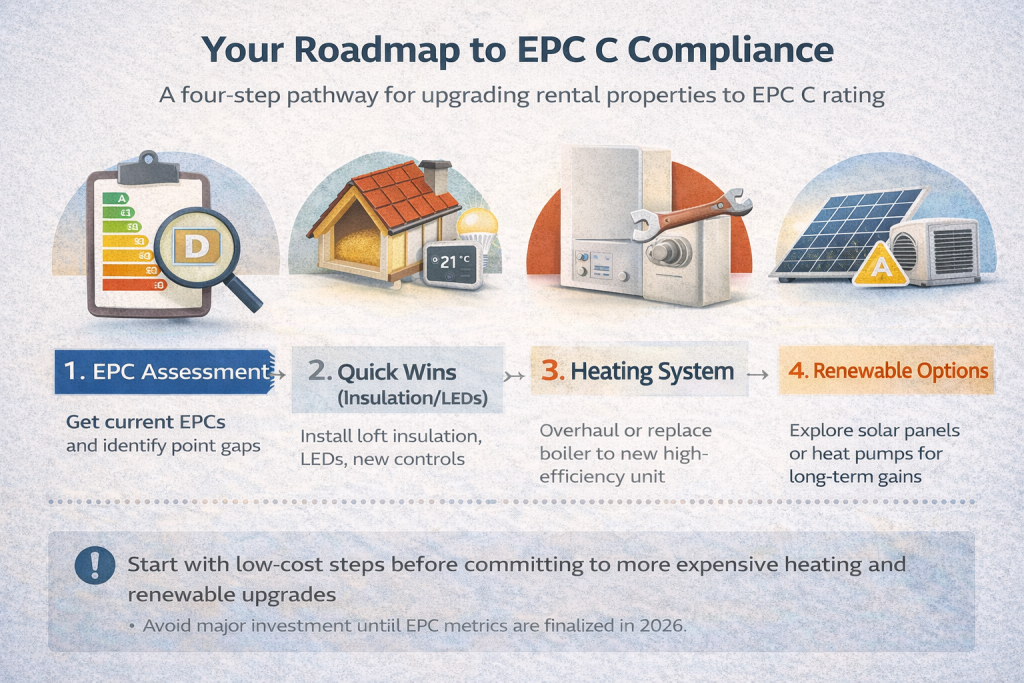
Solar panels add around 10 EPC points.
Costs range from £5,000–£8,000.
They also lower tenant energy bills.
Heat pumps can help.
They require careful property assessment.
Exemptions exist.
Listed buildings may qualify.
Cost caps still apply.
You must register exemptions formally.
Protecting Your Investment
EPC compliance protects value. Non-compliant homes face stigma.
Agents increasingly refuse risky listings. Buyers discount inefficient stock.
Tenants now calculate energy costs upfront. Efficiency affects affordability.
This trend will intensify. Energy costs remain high.
Landlords who act early gain leverage. Those who delay lose options.