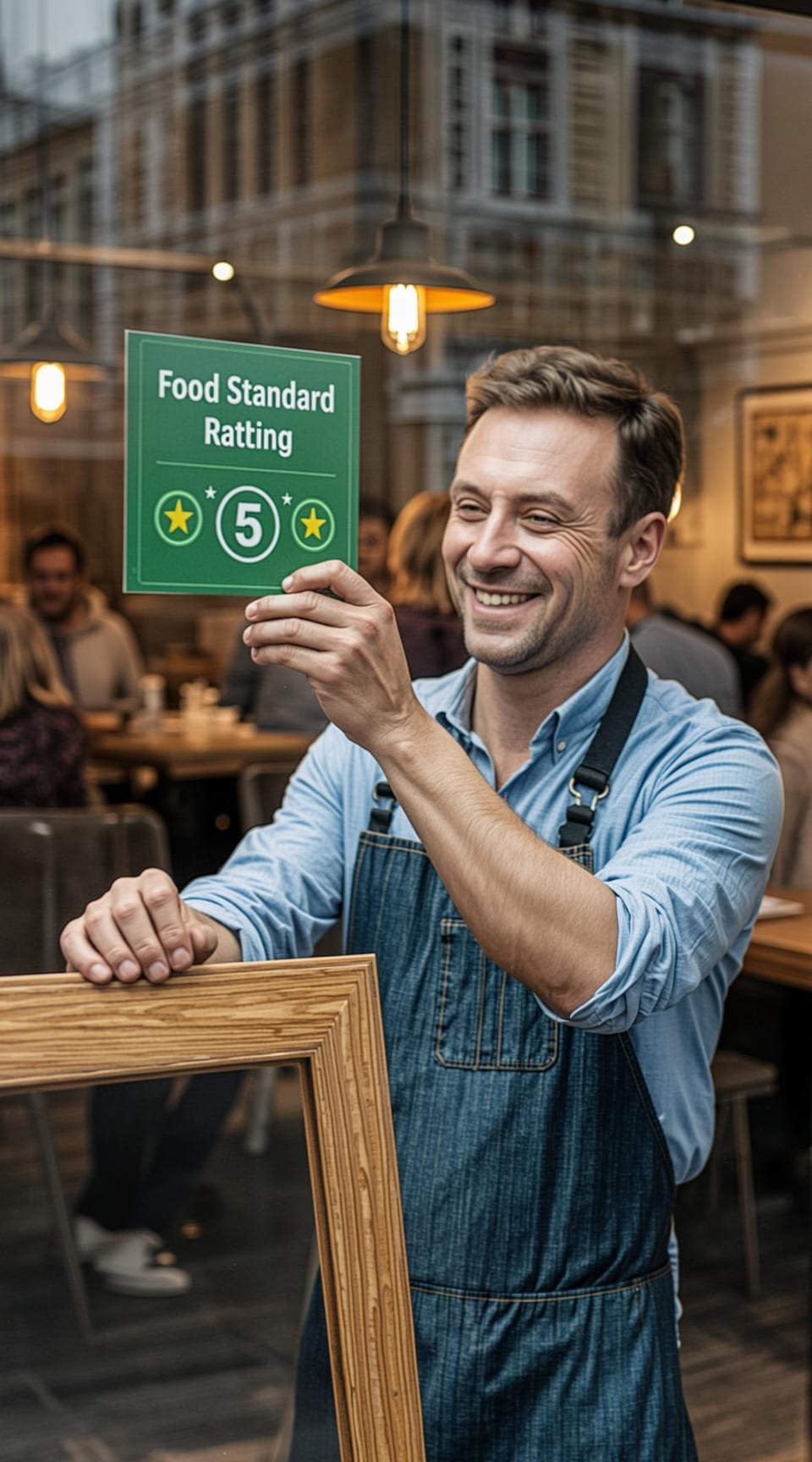
The inspector at the door
On a rainy Tuesday in Manchester, the lunch rush had barely begun. Ahmet, the owner of a busy grill restaurant, saw the one visitor he feared. The Environmental Health Officer stood at the door with a calm smile. Last time, Ahmet only achieved a “3 – generally satisfactory.” That sticker cost him bookings, Deliveroo reviews, and private events. This time, he made a promise to his team. They would earn a 5 star rating. This score signals “very good” hygiene standards. It builds customer trust before guests even read the menu.
What the FSA rating really measures
Many restaurant owners still think the Food Hygiene Rating Scheme is just about a quick look around the kitchen. In reality, inspectors score three areas that together determine whether you get a 0 or the coveted 5.
- Food handling: How food is stored, prepared, cooked, cooled and reheated, including cross-contamination control and temperature checks.
- Premises and structure: Cleanliness, layout, handwashing facilities, lighting, ventilation and pest control measures.
- Food safety management: Your documented procedures, records, staff training and whether inspectors trust you to maintain standards tomorrow, not just today.
Ahmet’s first mistake had not been a dirty kitchen; it was paperwork that lived only “in staff’s heads”, no consistent logs and no clear system to prove ongoing control.
Why restaurants get stuck at 3 or 4-instead of the 5-Star Food Hygiene rating
Most UK restaurants that never move beyond a rating of 3 or 4 share the same pain points.
- Last-minute panic cleans before inspections instead of daily routines.
- Temperature checks done “when remembered” rather than scheduled and recorded.
- Training given verbally once, then forgotten, especially with high staff turnover.
- Cleaning schedules and allergen procedures that exist as faded printouts or not at all.
These gaps might not cause an incident today, but they quickly erode an inspector’s confidence in management, dragging down the score even when the food looks fine. For Ahmet, that lack of confidence turned a busy, popular restaurant into a “3” that online customers could see instantly on the FSA website.
Step 1: build a simple, robust food safety system
To move from “hoping” for 5 stars to planning for them, Ahmet first focused on his food safety management system.
- Map the journey: Identify the key steps from delivery to service—receiving, storage, prep, cooking, cooling, reheating and service—and note where things could go wrong.
- Introduce practical controls: Use clear, written controls such as delivery checks, fridge/freezer temperature limits, cooking and cooling times, and allergen controls.
- Document and prove: Create simple checklists, daily logs and opening/closing checks, and keep them in a single folder or digital system so inspectors can see how you manage risk.
Food Safety Pro can sit at the heart of this, turning paper-based systems into automated, time-stamped records that show inspectors exactly how food safety is managed in real time.
Step 2: nail food handling and temperature control
Next, Ahmet looked at how food was handled during each service, aiming for consistency rather than occasional excellence.
- Standardise receiving: Check delivery temperatures, packaging integrity and use-by dates, and reject anything that does not meet set criteria.
- Protect cold chain: Keep chilled food below recommended limits and use calibrated thermometers to verify fridge and product temperatures.
- Cook, cool and reheat safely: Define minimum core temperatures for cooking, rapid cooling targets, and safe reheating guidelines, all recorded in a log that inspectors can review.
These checks not only protect guests from foodborne illness, they also show inspectors that food is handled hygienically from end to end.
Step 3: make the structure inspection-ready every day
A 5-star rating depends heavily on the condition of your premises, not just on the day of inspection.
- Create a zone-based cleaning schedule: Break the restaurant into zones (kitchen equipment, prep surfaces, storage, toilets, front-of-house) and assign clear frequencies and responsibilities.
- Focus on “inspection hotspots”: Pay special attention to under and behind equipment, drains, splash areas, handwash basins and pest entry points.
- Fix faults quickly: Damaged flooring, peeling paint, broken tiles or poor lighting can all reduce your score if they affect cleanability and hygiene.
Ahmet moved from frantic pre-inspection deep cleans to a daily, logged routine so that any surprise visit looked like a normal day, not a special event.
Step 4: prove staff training and culture
Inspectors look closely at whether staff understand and apply food safety rules, because this underpins confidence in management.
- Formal training: Ensure food handlers complete recognised food hygiene training appropriate to their role and keep evidence on file.
- On-the-job refreshers: Build short toolbox talks into team meetings covering cross-contamination, allergens, handwashing and cleaning.
- Visible leadership: Owners and managers should model good behaviour—using thermometers, washing hands correctly and challenging poor practice in real time.
When Ahmet could show certificates, training records and sign-in sheets for briefings, the inspector’s confidence score improved alongside his team’s performance.
Step 5: prepare for the inspection, appeal and re-visit
Even the best-run restaurants can have an off day, so planning for inspection and what happens afterwards is essential.
- Know your scheme: Understand how ratings from 0 to 5 are awarded and the three scoring areas inspectors use.
- Organise documentation: Keep your food safety policy, HACCP-based procedures, cleaning schedules, temperature records, pest control reports and training certificates together and up to date.
- Use your rights: If you believe your rating does not reflect your standards, you can appeal, request a re-inspection after improvements or add a “right to reply” on the public register.
For Ahmet, that combination of documented control and a prepared team turned his next visit into a 5-star success he could proudly display on the window and across all online platforms.