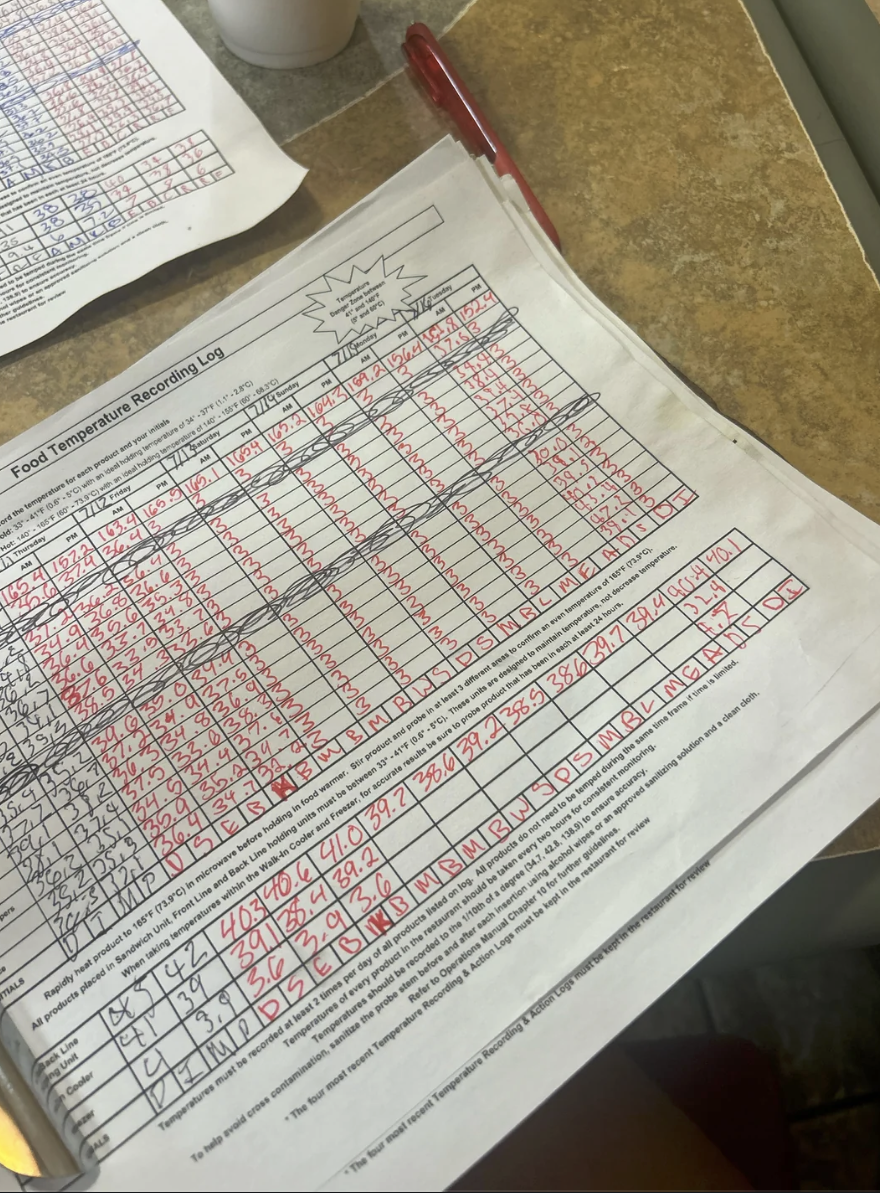
Let’s be honest about what the food safety diary actually is in most kitchens.
It’s the A4 binder on the shelf near the back door. Sometimes it’s in a drawer. Occasionally it’s wedged between a catering pack of gloves and a box of probe wipe sachets. It’s the thing someone grabs on a Wednesday when a colleague mentions the EHO came to the place down the road last week.
You didn’t get into hospitality to manage documents. You got into it because you’re good at food, you understand service, you like the pace of it, or you wanted to build something of your own. The compliance paperwork that comes with running a food business is not the part anyone talks about when they’re planning to open.
And yet here it is. Every shift. Temperature checks at the start of service. Probe logs for the fridge and the freezer. A cleaning schedule that needs signing off. A delivery record. An allergen log. Staff training records that need updating whenever someone new joins the team.
On a quiet Tuesday in January, this is manageable. On a Saturday night in August, when you’re down a chef and the covers are full and someone’s just flagged a possible allergen issue on table six, the diary is the last thing anyone is thinking about.
The Gaps Nobody Talks About
The honest truth about paper food safety records in hospitality is that most of them have gaps. Not because operators are reckless or don’t care. Because humans are fallible, kitchens are chaotic, and paper diaries require every person on your team to remember, every day, without prompting, to pick up a pen and write something down.
This works perfectly on the days it works. On the days it doesn’t when it’s busy, when someone’s stressed, when a new team member wasn’t trained properly, when the opening check was done but the closing one got forgotten in the rush to turn the lights off you end up with a record that doesn’t reflect what actually happened.
And the problem with paper is that you often don’t know what’s missing until someone checks. Which means you might not know until an Environmental Health Officer is sitting at your pass going through the binder.
The Catch-Up Problem
Most food operators have, at some point, sat down with a food safety diary and filled in a week’s worth of records in a single afternoon. It happens. It’s understandable. It’s also exactly what an experienced EHO will spot.
Dates that look too consistent. Entries that all share the same handwriting when your team has six people. Temperatures that cluster suspiciously around the same numbers. The records may be complete on paper, but the confidence in management score which is what actually drives your FHRS rating reflects whether the EHO believes those records represent reality.
What “Keeping On Top of It” Actually Costs
Even when teams do manage to stay on top of paper compliance properly, the time it takes adds up. Across a week, the minutes spent manually recording temperatures, signing off checklists, updating training logs, and checking that everything is complete represent real operational time that could go elsewhere.
For independent operators with small teams, this is not a trivial cost. It’s time taken away from prep, from service, from training, from running the business.
There Is a Different Way to Do This
Digital food safety management doesn’t mean replacing your team’s judgement. It means replacing the part of the job that requires your team to remember to do something, every day, without fail, on paper, with no backup.
Food Safety Pro handles the daily compliance record automatically. Temperature logs are timestamped without anyone having to find a pen. Cleaning schedules send reminders and record completion. Allergen information is stored and accessible. Staff training records update as your team completes modules.
The result is a compliance record that’s always current, always complete, and always ready to show an Environmental Health Officer because it was built in real time, not reconstructed after the fact.
You didn’t get into hospitality for the paperwork. You shouldn’t have to spend your energy on it.
Start a 14-day free trial at fsp.compliance-engine.io no card required.