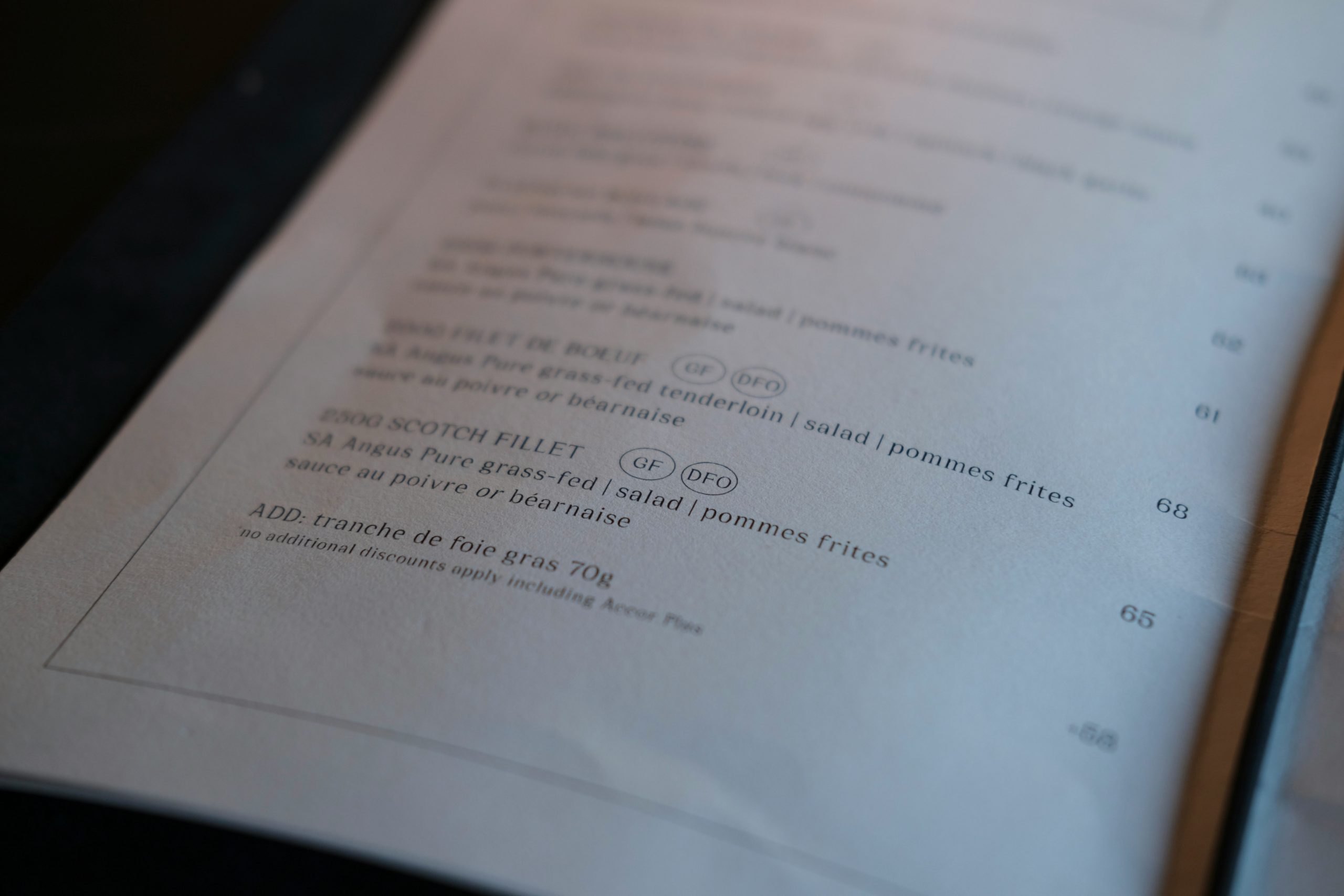
Food allergy management is one of the most consequential areas of food safety law for UK hospitality businesses. Get it right and it’s invisible infrastructure. Get it wrong and the consequences range from a formal improvement notice to a fatality, and everything that follows from that.
This post covers what UK food businesses are legally required to do under the Food Information Regulations 2014 and Natasha’s Law, and what compliant allergen management looks like in practice.
The Legal Framework
The Food Information Regulations 2014 (FIR) require food businesses in the UK to provide accurate allergen information to customers for the 14 major allergens listed in the legislation. These are: celery, cereals containing gluten, crustaceans, eggs, fish, lupin, milk, molluscs, mustard, peanuts, sesame, soybeans, sulphur dioxide and sulphites (above a certain concentration), and tree nuts.
For food sold loose, including meals served in restaurants, takeaways, and cafés, this information must be available to customers before they order. It can be communicated verbally by trained staff, on a written menu, or through a combination of both. What is not acceptable is staff who don’t know, or documentation that doesn’t match what’s actually being served.
Natasha’s Law
Natasha’s Law came into force in October 2021 and extends allergen labelling requirements specifically to food that is prepacked for direct sale, PPDS. This includes food prepared and packaged on the same premises where it’s sold, such as sandwiches, salads, and baked goods assembled in advance and wrapped for display.
Before Natasha’s Law, this category of food existed in a regulatory grey area. The law now requires PPDS food to carry a full ingredients list with allergens emphasised, typically in bold, directly on the packaging.
The legislation was named after Natasha Ednan-Laperouse, who died in 2016 after suffering an allergic reaction to a baguette that contained sesame. The baker had baked the seeds into the dough without declaring them on the label. Her death, and the Coroner’s inquest that followed, directly informed the change in law.
What Compliant Allergen Management Looks Like
For most hospitality businesses, compliant allergen management involves several interconnected elements.
Accurate recipe documentation. Every dish you serve should have a complete ingredient breakdown that identifies which of the 14 allergens are present. This documentation needs to be kept current, if a supplier changes an ingredient or you adapt a recipe, the allergen record must reflect that change immediately.
Staff knowledge and training. The staff member who takes the order must be able to access accurate allergen information or direct the customer to someone who can. Saying “I think it should be fine” is not compliant and has led to serious harm. Training records should show that allergen awareness has been covered with every member of the team.
Customer communication at point of order. Your process for communicating allergen information should be consistent, documented, and understood by everyone who interacts with customers. Whether that’s a written menu, a verbal declaration process, or a combination, it needs to be embedded in how your operation runs, not left to individual discretion.
Labelling for PPDS food. If you prepare and pre-package food on the premises for direct sale, Natasha’s Law applies. Every item requires a full ingredients list with allergens emphasised.
The Risk of Getting It Wrong
Allergen-related incidents are taken extremely seriously by enforcement authorities. A failure in allergen communication that causes harm to a customer will be investigated thoroughly, with your documented allergen management system, or the absence of one, forming a central part of that investigation.
Beyond the regulatory consequences, the reputational impact of a serious allergen incident is severe and long-lasting. The businesses that handle allergen management best treat it not as a legal checkbox but as a fundamental part of how they serve customers.
Managing Allergens Digitally
Food Safety Pro’s allergen tracking feature gives food businesses a documented, up-to-date allergen record for every dish on the menu, accessible at the point of service, updated centrally when recipes change, and integrated with the wider compliance record your business maintains.
Staff can access accurate allergen information without relying on memory. Any change to a recipe or supplier is reflected immediately across the system. And your allergen documentation forms part of the audit trail an EHO can review during an inspection.
For food businesses serving customers with allergies, this is not an optional upgrade. It’s the infrastructure that makes consistent, legally compliant allergen communication possible at scale.
Start a 14-day free trial at fsp.compliance-engine.io no credit card required.